
Why Dublin 2 Is Still Ireland's Premier Business Address
A look at what actually makes Dublin 2 the default choice for client-facing, legal and financial-services companies establishing an Irish base.
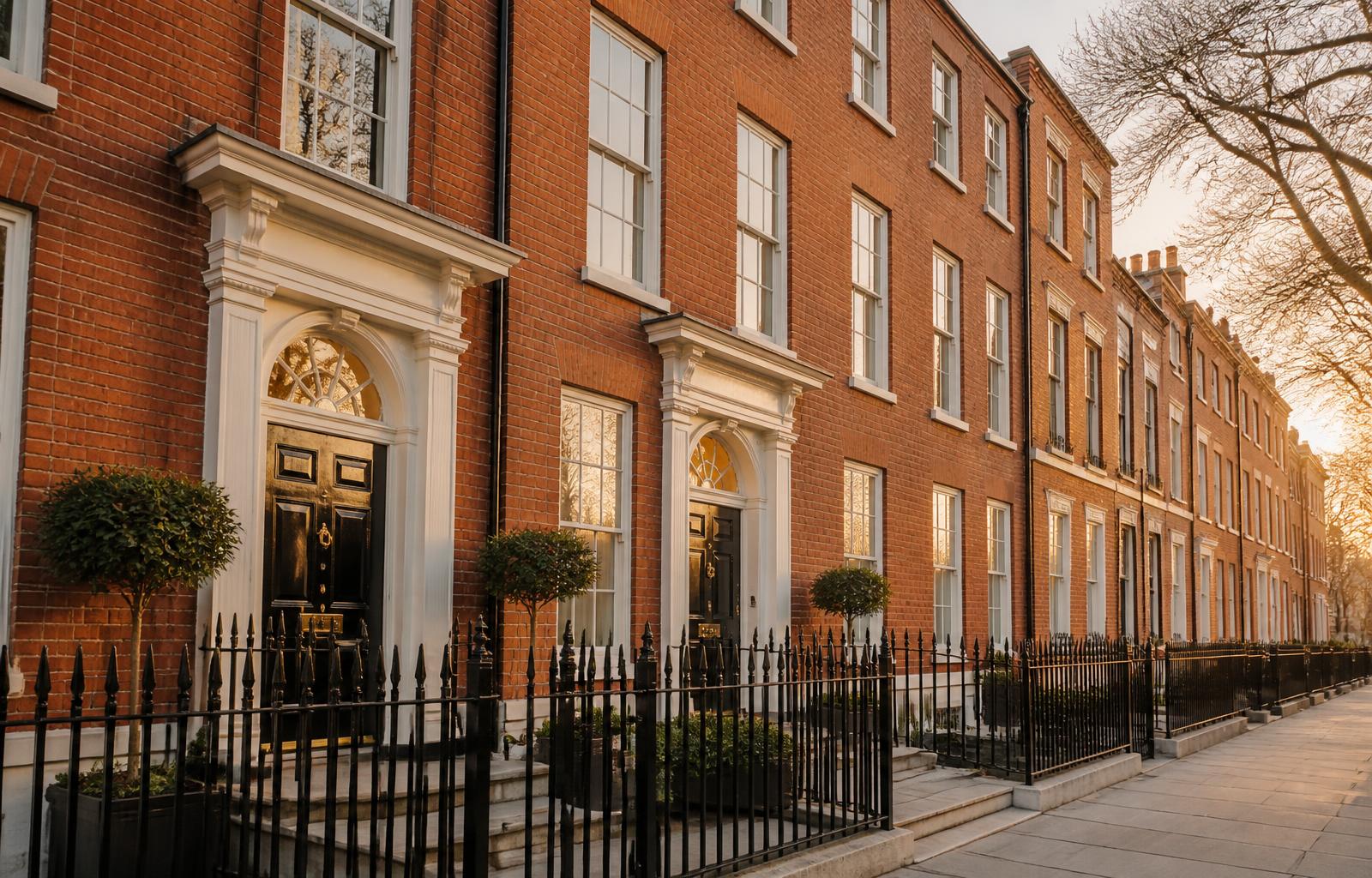
Dublin 2 sits on the south side of the River Liffey and takes in St Stephen's Green, Grafton Street, Merrion Square, Fitzwilliam Square, Harcourt Street, Trinity College and Grand Canal Dock. It is one of the smallest postal districts in the city by area and one of the densest by concentration of law firms, financial-services companies, government departments and professional advisers. For a company deciding where to put its name on a door, that density is the entire point.
What "Dublin 2" Actually Covers
The Dublin 2 postcode is compact but disproportionately important. Within its boundaries sit the Department of the Taoiseach, the Department of Finance, the Central Bank of Ireland, the Houses of the Oireachtas at Leinster House, and Trinity College Dublin. Major Irish and international banks, law firms, accounting practices and corporate advisers cluster across the same handful of Georgian squares and adjoining streets.
Headquartered inside the Dublin 2 postcode, including the Taoiseach and Finance.
St Stephen's Green and Harcourt Street run directly through the postcode.
Courts, regulators and government within a short walk of one another.
St Stephen's Green, Merrion Square, Fitzwilliam Square and Merrion Square.
A Walkable Postcode for Client, Court and Government Business
Few cities offer what Dublin 2 offers within a fifteen-minute walk: the Four Courts and the Law Society are a short journey away, Leinster House and the main government departments sit inside the postcode itself, the Central Bank and most major Irish and international banks have a presence nearby, and the National Gallery, Merrion Square and St Stephen's Green give the area a genuinely pleasant, low-rise Georgian character that most business districts cannot match.
For companies that meet clients, regulators or counterparties in person on a regular basis, that walkability is a real operational advantage, not just an aesthetic one. It means a partner can walk from a boardroom to a regulator's office, then to a client lunch, without leaving the postcode.
Ireland's principal courts complex, a short walk across the Liffey.
Seat of the Oireachtas and the main government departments.
Ireland's financial regulator, with a presence on the south side.
Ireland's leading university and a pipeline for graduate talent.
Why Legal and Financial-Services Firms Concentrate Here
Address still carries weight in professional services. A Dublin 2 registered and trading address signals proximity to the courts, to government and to the institutions that regulated firms deal with routinely. This is part of why the postcode carries more serviced offices per square mile than almost anywhere else in the country — demand from legal, financial and advisory firms has kept supply concentrated in the same handful of Georgian squares and adjoining streets for decades, even as newer business districts have opened up elsewhere in the city.
Transport: Luas, DART and Bus in One Postcode
Dublin 2 is unusually well served for its size. The Luas Green Line runs directly through it with stops at St Stephen's Green and Harcourt Street, DART services are a short walk away at Pearse Street and Grand Canal Dock, and the postcode sits on multiple Dublin Bus corridors. Most private offices in the area are within a few minutes of a tram or train stop, which matters for staff commuting from across the city and for visiting clients coming from the airport or elsewhere in Ireland.
Direct stops at St Stephen's Green and Harcourt Street, linking south Dublin suburbs to the core.
Pearse Street and Grand Canal Dock stations connect the postcode to the coastal rail network.
Multiple cross-city bus corridors run through Dublin 2, including Airlink routes from Dublin Airport.
What It Costs to Be Based in Dublin 2
Dublin 2 is a premium postcode, and the pricing reflects that. Small private offices for one to four people typically start in the low hundreds of euro per person per month, with mid-sized teams of five to fifteen people generally paying somewhat more per desk than larger floors, before per-person pricing eases again at larger headcounts. By comparison, postcodes further from the core — Dublin 8 or Dublin 12, for example — can run meaningfully lower per desk.
The premium buys location, not just square footage: proximity to courts, government, banking and a walkable client base is what companies are actually paying for. For most client-facing firms, that premium is recovered many times over in saved travel time, stronger credibility and faster access to the people who matter.
Is Dublin 2 Right for Every Company?
Not necessarily. A back-office or engineering-heavy team with limited client-facing needs may get better value further from the core. But for legal practices, financial-services firms, corporate advisers, and any company whose staff regularly meet clients, regulators or government contacts in person, Dublin 2 remains the default answer — and for many international companies establishing an Irish presence for the first time, the credibility of the address is itself part of the business case.
- Your team meets clients, regulators or government contacts in person regularly.
- A prestigious Dublin 2 business address strengthens your credibility with partners and candidates.
- Proximity to courts, the Central Bank or government departments is an operational advantage.
- You want walkable access to professional advisers, banks and transport links.
- You need a fully-serviced office your team can move into within days, not months.
Establish your Dublin 2 presence in days, not months.
Reserve a fully-serviced private office at one of our central Dublin 2 locations and start operating immediately. Tell us your team size and move-in date, and we will send available suites with an all-inclusive monthly figure.
Frequently Asked Questions
Not exactly. The IFSC and Docklands financial cluster sit mainly in Dublin 1, immediately north of Dublin 2. Many financial-services firms maintain a presence in both, using Dublin 2 for client-facing and advisory functions and Dublin 1 for larger back-office or trading floors.
A registered Irish business address is required, and an operational office in Dublin 2 makes banking, hiring and client meetings considerably smoother.
Our offices are fully serviced and furnished, so most teams are operational within days of signing — desks, fibre connectivity, meeting rooms and reception are already in place.
We operate four A-grade buildings in central Dublin, all within walking distance of Luas, DART and main bus corridors, with our flagship locations on Lower Baggot Street in Dublin 2.